How to determine if powder and bullet are in contact

I am trying to tighten up my reloading for my 7PRC. I have a workable load, but I am curious about 1 thing:
Are the occasional outlier shots due to the case volume of that particular cartridge being slightly less than the rest?
I have:
ADG Brass
ELDx 175 gr
H1000 @ 66.2gr
COAL is 3.3723
CBTO is 2.6375 (I have measured multiple times using my Lock n Load)

I don’t get pressure sign and I get good velo, mostly good accuracy but 1 out of 7 is slow making my SD and ES more than they should be and pushing my accuracy to about 1 MOA instead of 6. to .75 where it would be without those factored in.

So, what I am trying to figure out is if my bullet is touching or compressing the powder and affecting the burn.

Does anyone know how to measure this?

A few options to consider.

You could plug the parameters into AI (Google’s Gemini is really easy). Give it your details and ask what the load density is, whether it’s compressed or not, etc. Everything from AI needs to be error checked, but it’s a great way to get ideas.

Also, you could just measure the level of the powder below the case mouth with calipers (the other end) then compare that to the length of the bullet seated below the mouth. It’s real rough, but might tell you something.

I struggled with a compressed load - could hear a crunch when seating bullets as the bullet fractured the kernels of Varget. I bought a Forster funnel with a 6" drop tube - $15 on Midway USA. It uniforms the orientation of stick powder (when poured slowly) and buys you a lot of room. On my .308, it lowered the powder level by 1/4". No more crunch. On 7PRC, more powder = likely more gain from this method.

Not sure if this is causing your issue, but a cheap option to consider.

Thanks for idea about the calipers, I didn’t think of that. I tried AI but I didn’t get an answer outside of “stick to SAAMI” .

I like the calipers idea best myself.

There’s always Gordon’s or Quick load, but they both require perfect measurements of the case volume. Hornady did a podcast where they said the average Joe’s abilities to measure this with standard equipment is about useless.

I was curious about how to calculate your load density starting with published load data (61.2gr = 84% density, etc). I came up with 100% load density being 72.5 gr, so yours is sitting around 91-92%. Just to verify, I plugged it into Gemini. Here’s what it said.
****
Based on your specifications, your estimated load density is approximately 92%, which means your bullet is not touching, compressing, or crushing the powder. Consequently, this is not considered a compressed load, and there will be a small air gap (roughly 8%) between the base of the bullet and the top of the powder stack inside your ADG 7mm PRC Brass.

Breakdown of the Calculations

To determine your exact load density, the internal geometry of the cartridge is calculated using the physical specifications of your components:

  • Case Volume: ADG 7mm PRC Brass has an average internal water capacity of 80.4 grains of H₂O (which converts to a total internal volume of ~5.21 cc).
  • Bullet Seating Depth: The Hornady 175gr ELD-X has an overall length of 1.567". Given a SAAMI standard case length of 2.280" and your COAL of 3.3723", the bullet is seated 0.475" into the case neck. This shank protrusion displaces roughly 0.49 cc of internal room.
  • Usable Case Volume: Subtracting the bullet’s space from the total volume leaves 4.72 cc of usable capacity for the powder.
  • Powder Volume: Hodgdon H1000 has a Volume Measure Density (VMD) of 0.0656 cc/grain. Your 66.2-grain charge occupies 4.34 cc of space.

Because the powder volume (4.34 cc) is less than the usable case volume (4.72 cc), your load fills about 92.1% of the available room. You have a highly efficient, near-full case density which is excellent for consistent ignition and velocity standard deviations without forcing any structural compression on the Hodgdon powder.

Attribute Value / Measurement
Total Case Volume (ADG) 5.21 cc (80.4 gr H₂O)
Bullet Displaced Volume 0.49 cc (Seating depth: 0.475")
Usable Case Volume 4.72 cc
Powder Charge Volume (66.2gr H1000) 4.34 cc
Final Load Density 92.1%
Compression Status No (Not Compressed)

Too much time on my hands today :slight_smile:

Wow, that math is mathing. No way i could have figured that out. Much appreciated.

Hey Ben I’m

Finding the seating pressure variances cause a big effect in the es of my stings. When I sort my seating pressure and try to stay in ± 2lbs for my 6mm projectiles I get groups that really tighten up. So I’ll sort them out and use big out liners as fouling or others. With your caliber I not so sure as resolving that small a change with a higher pressure pack would be harder so It would be more likely ± 5-6 you can see. If you don’t use an arbor press and pressure pack you can’t really do this. I was blown away when switching seating for my coax to the K&M with le wilson dies how much you can feel the seating even without a pressure pack. We prep brass the same way and treat It the same and there are pieces that just take so much force to seat or so little. One can never feel It with a bench press with cramming and a long handle. What press do you use?

I tested It and It played out the tougher To seat drove them out of the group. That went for the way easier ones to. But when I was in the zone for the right load es 8 or under and sd’s 4 and lower. Moving to .25moa groups.

Granted it’s a piece of load to a kernel sorting bullets and seating primers to ± .0005 all make a diff too

Thanks for that reply, but honestly I really don’t understand what you’re saying or how your measuring seating pressure. I don’t know what an arbor press is, but I have a redding turret press.

Hey Ben sorry I assumed you were doing the full precision craziness in loading loading so lets drill back for aa second. And if any of this is stuff you know please disregard just trying to be complete here.

Re: Your chain

The biggest q from me is are you using a bushings to size you necks and then a mandrel to set neck tension? … If you are not setting neck tension to something like .002" Id say look there first. I assume you understand that process if not and for any others reading .

A standard FL sizing die has a de-caping stem with a ball on it that on the stroke of the die closes down the big fired hole and then opens It up the neck to accommodate the seating of the bullet with some grab or bite ----neck tension.

The next step down the rabbit hole is to use a bushing and a mandrel to accomplish this. The bushing acts in the sizing die as the device that resizes the neck for your fired state of completely open. They are precision collets that are measure typically to the thou and chosen based on the sixe of a loaded cart outside neck diameter.

The neck tension is then set to the desired size usually from .001 up for your desired effect. This is also chosen based on your components and the final neck diameter size of a seated bullet . .001 is really loose and typically for single feed bench rest for example. The looser It is the easier the bullet escapes. When you do this sizing there is some spring back of the brass due to memory this will change depending on how many firings/ sizings and state of the brass with or without annealing. Point being with the Bushing and mandrel you can really create tighter tolerances and consistency on your brass and what force It takes to seat Consequently, the variances in how hard It is for the bullet to escape the case. The harder It is the more pressure builds behind the bullet . More pressure is a change in velocity. This could look like a flyer.

So if you are not doing this It would be my first look… there are many ways to do It I use an SAC Modular sizing die which does all of this in one stroke decap/ FL size and mandrel instead of the way I did before in 3 steps. saves a ton of time but they are like $400 (Slap my ass and call me sally)

PMA and others make mandrel dies that are inexpensive relatively and the carbide mandrels are not cheep but you will see a huge diff. You could use something like a LE Wilson Sizing die that takes bushings. If you do buy SAC bushings fit and they are awesome . LE wilsons own bushings are great and if you are making Hunting ammo which It seems you are got with that save a couple of bucks…

Wind up Neck tension is the biggest spot in the chain to lower SD/ES if you are not concentrating on that today

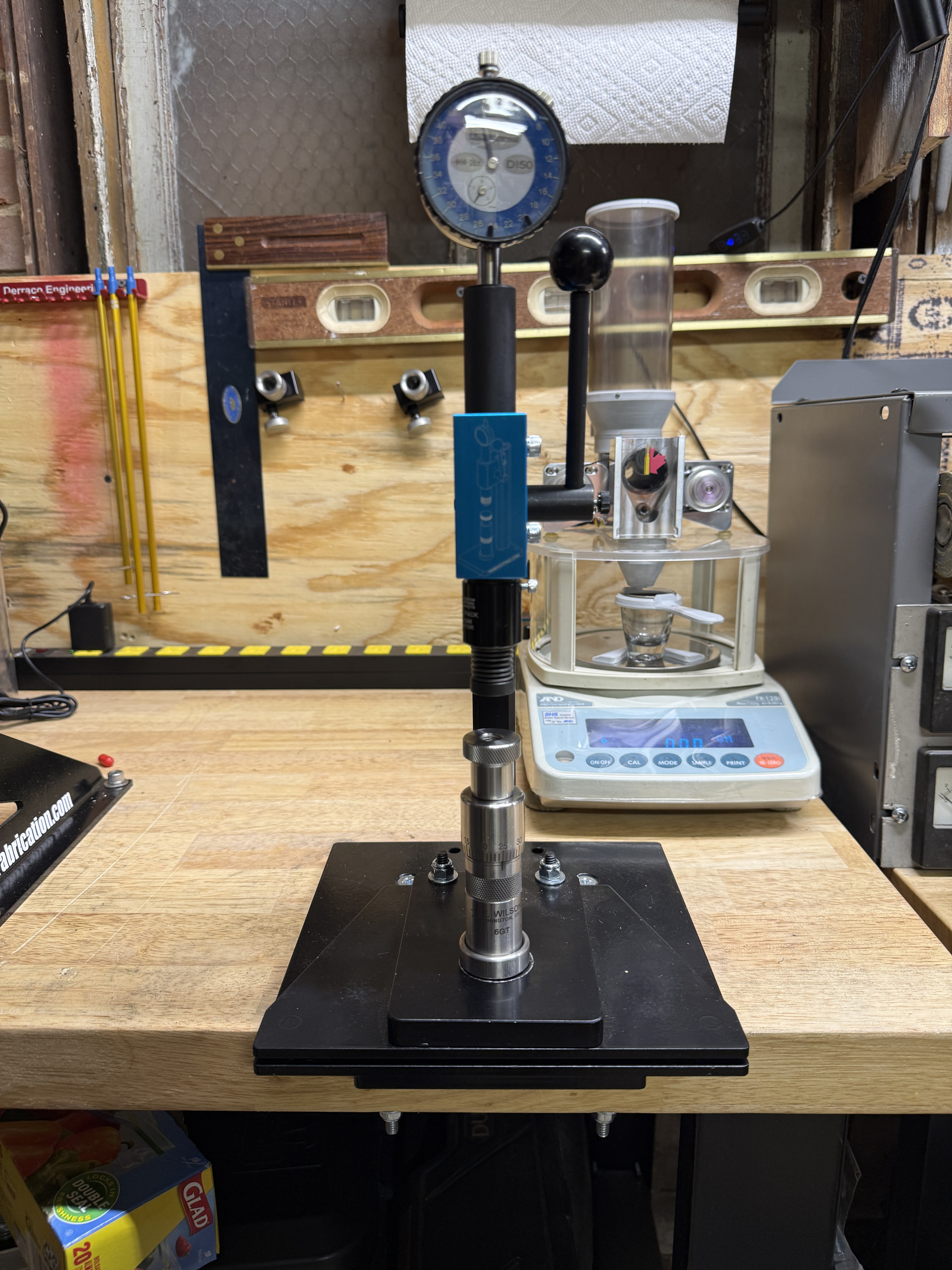
Now to the arbor press The K&M, see below, I mentioned, there are others, is non camming press with a small handle in which you use an inline seating die . this die really holds the components in a tight tolerance centers and seats the bullet perfectly strait with the least amount of run out. Another rabbit hole. Now this press has the option of adding a power pack which measures seating force, this is what I was discussing, see the Dial on the top. You can with the low pressure pack see the seating force down to the half pound if you really pay attn. Now for the 7mm you might want the larger force wich has less precision and shows much higher seating forces I’m not sure…the bigger issue is your tactile control and sensitivity to what It takes to seat a bullet. With this set up really fine. With your Redding you really don’t feel the bullet seat at all. The difference seat to seat is huge and you get a real sense of the differences cartridge to cartridge. Now if you can see It and feel It you can sort for It and that flyer will most likely disappear.

Disclaimer, that doesn’t stop my Yips or errant shots. I make plenty and with SD’s in the 4 range or lower It ain’t the cart and I can take that out of the equation.

Totally agree. If neck tension is not tightly controlled, it’s a really good place to focus on.

Thanks again, Adam. Unfortunately you and I are at such different levels in the reloading game, I had to take your dumbed down explanation and have Gemini translate it to me, lol. Once translated, that helped a ton.

I have a 21st Cen Mandrel, but not bushing die or bushings. I thought they were either or, not to be used together. So, that helped a ton. I have a Redding “S” sizing die and 3 bushings coming today and tomorrow. According to ADG, I need .311, .312*, and .313 to make sure I get that .002 neck tension. I am confident this will help.

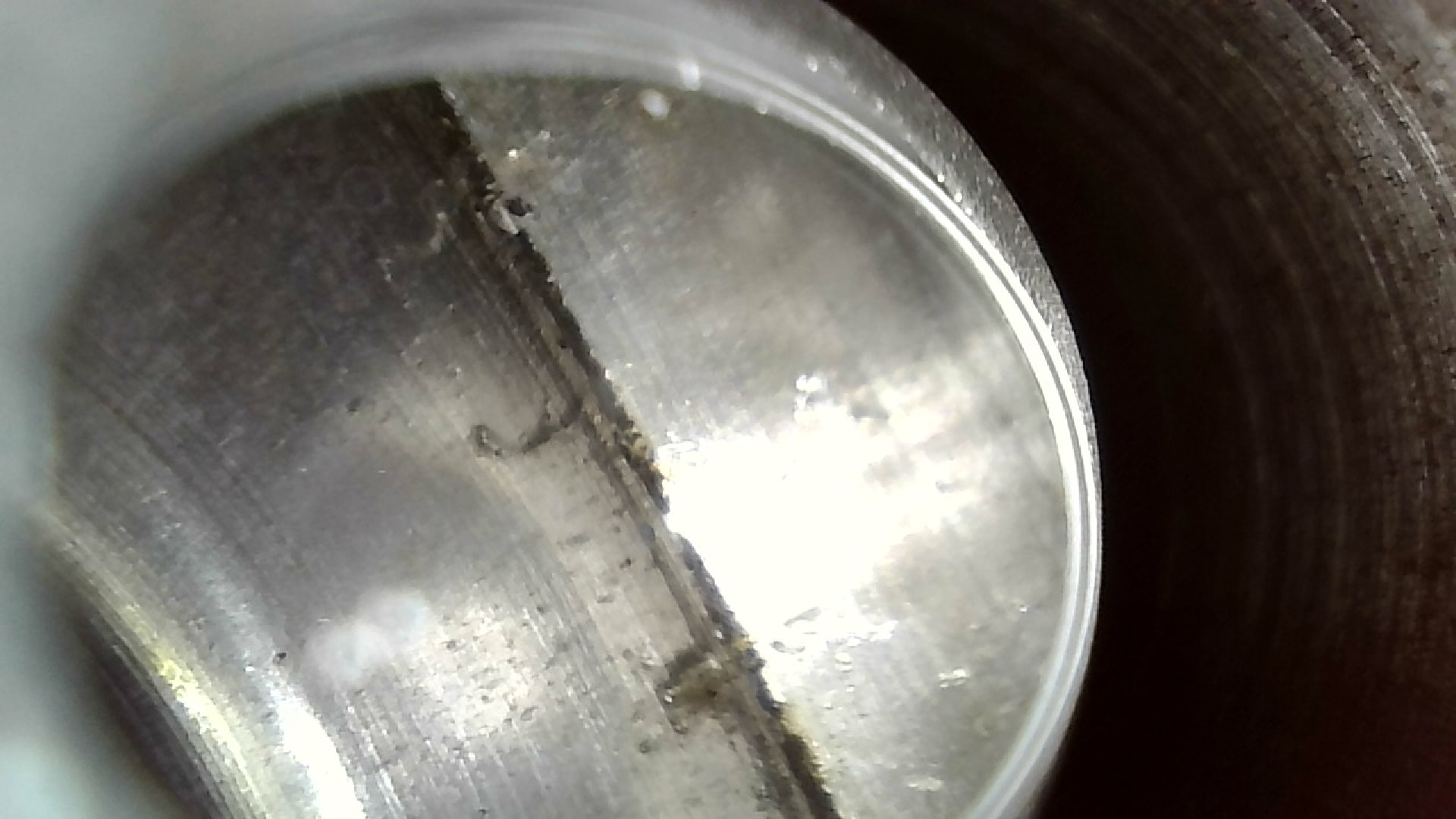
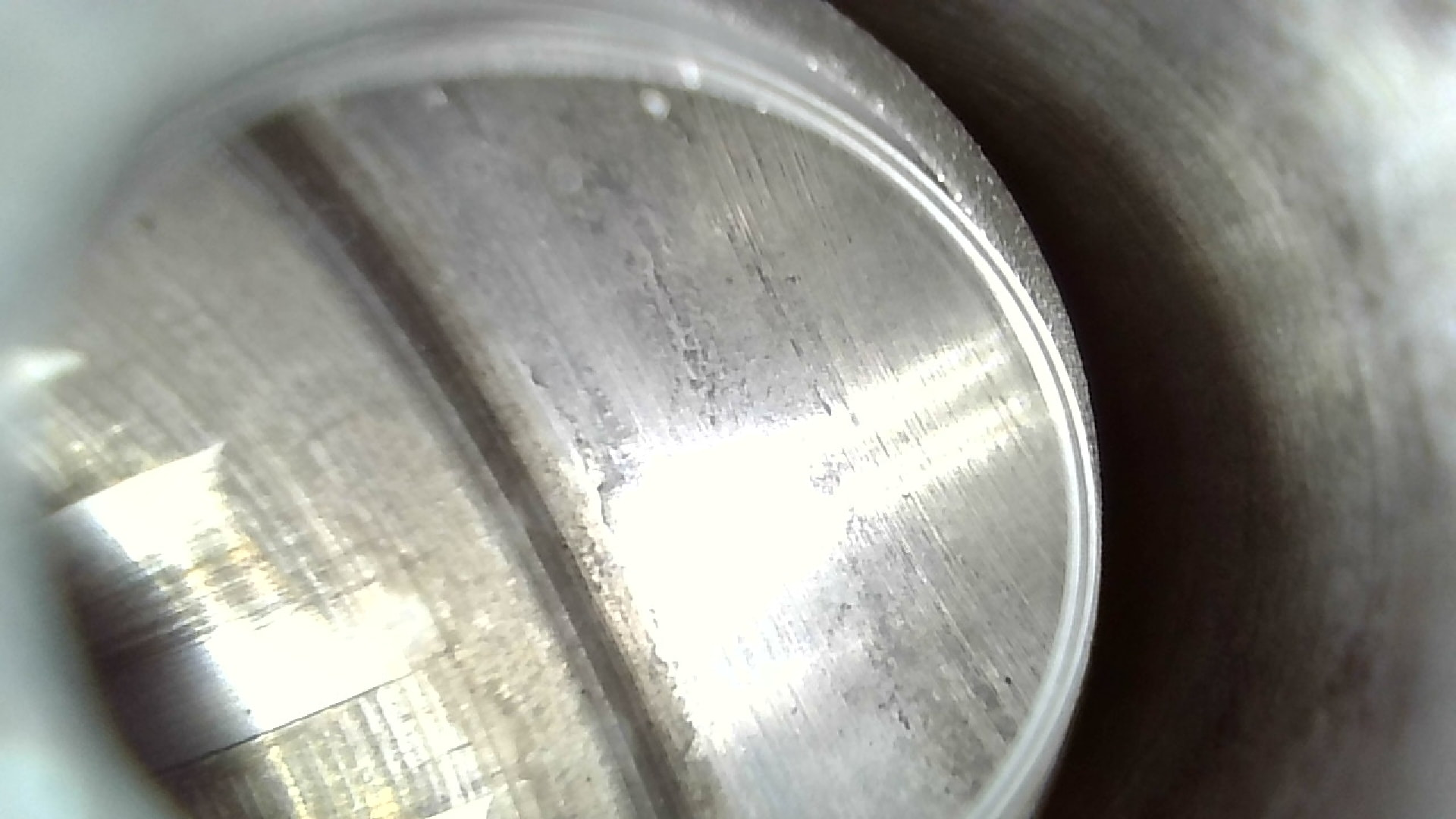
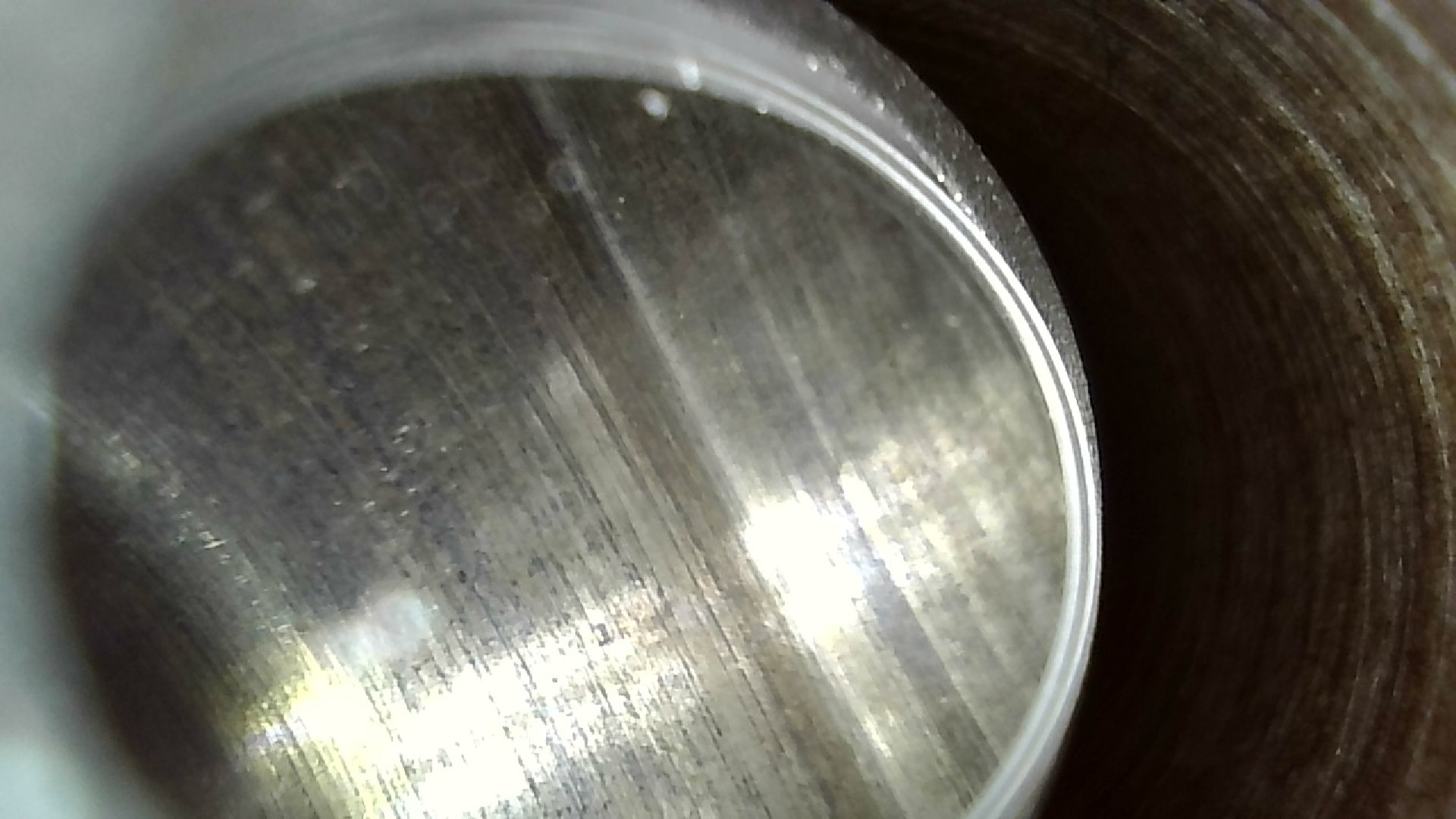
I also learned about carbon rings. So I checked that being loading a round and once ejected I saw scuffing. Followed a process so saturating with carbon cleaner and then power brushing. Bore scope also comes today, so I will be able to check.

With those 2, I should see my groups tighten up and my SD/ES as well.

Thanks

@Ben love It. Sorry for geeking out so heavily. Got to love AI all the best

Bore Scope came - the clean image is my “new” 30-06 barrel. Less than 30 rounds down this tube. I have more scrubbing to do :frowning:

Uh oh. Ben is catching the bug…heading down the rabbit hole :slight_smile:

It’s contagious and expensive

Well, not really a rabbit hole guy, as you can tell by how much I didn’t really understand from Adam. But, I can see the carbon ring and I really do want my 7PRC to shoot really well with my Cure Carbon barrel so if I ever go out to Jim’s range I can change his tune about both the 7PRC and the barrel :).

No, really… its just too expensive to keep struggling to find the combo that I can trust at extended ranges. My buddy and I are planning a Elk hunt where shots will be 300+ at a minimum with some wind.

Before I started reloading and testing, I only put about 30 rounds through it this year. But since I started, hundreds. Before, it was shooting 3/4". I haven’t gotten it there with my loads. I think between removing the carbon rings and the neck tension, I should be able to.

There are many advantages to reloading as you are learning, but if you are slightly OCD there are many rabbit holes that you can go down. I try to stay out of the rabbit holes, but I do find myself chasing the “extra” 1/4” reduction in my 3/4” group size…

@ben Its a crazy rabbit hole. Im an engineer by schooling and a tinkerer so im doing this just to see how far I can go. Hell im just starting to unify pockets and flash holes. Its a never ending additive to the process and a never ending gaping hjole in my wallet LOL to what end and what for ? I don’t know..

I will say switching to berger bullets mad 1/2 moa go to 1/4 pretty quick the HT products are ultra forgiving on the Jump and just shoot lights out in comparison. You might try buying a box of Yellow box Berger 175 elite hunter cartrages and just shoot them and see what they look like the yellow box stuff shoots very well..

Im not a hunter but Im completely sold on Berger as are most of the guys I talk to who shoot bench and prs you cant go wrong with It . You might load up so Berger 7mm 175 Grain Elite Hunter or another .

Have you been on the 7mm page at Snipers Hide? Im sure there are guys there who will dial It in for you for sure. they love to help. I see some discussions on th berger and a lot on the A-tips they have a dedicated 7mm loading thread could be a place to ask and get some thoughts they all have tried everything