Hey guys, I just used my Hornady OAL gauge to measure seating depth and I’m running into an issue while trying to seat bullets. Using my Hornady seating die, I have it threaded all the way out and the bullet is still being seated too deep for the measurement I’m looking for (20 thou off the lands). Have you ever run into this? If so, what did you do?
There are two ways to adjust the die. First is the placement of the collet on the die, and the second is the top screw of the die.
It sounds like the top screw is all the way out, but perhaps the collet isn’t on the right place on the die? Does that make sense? A pic?
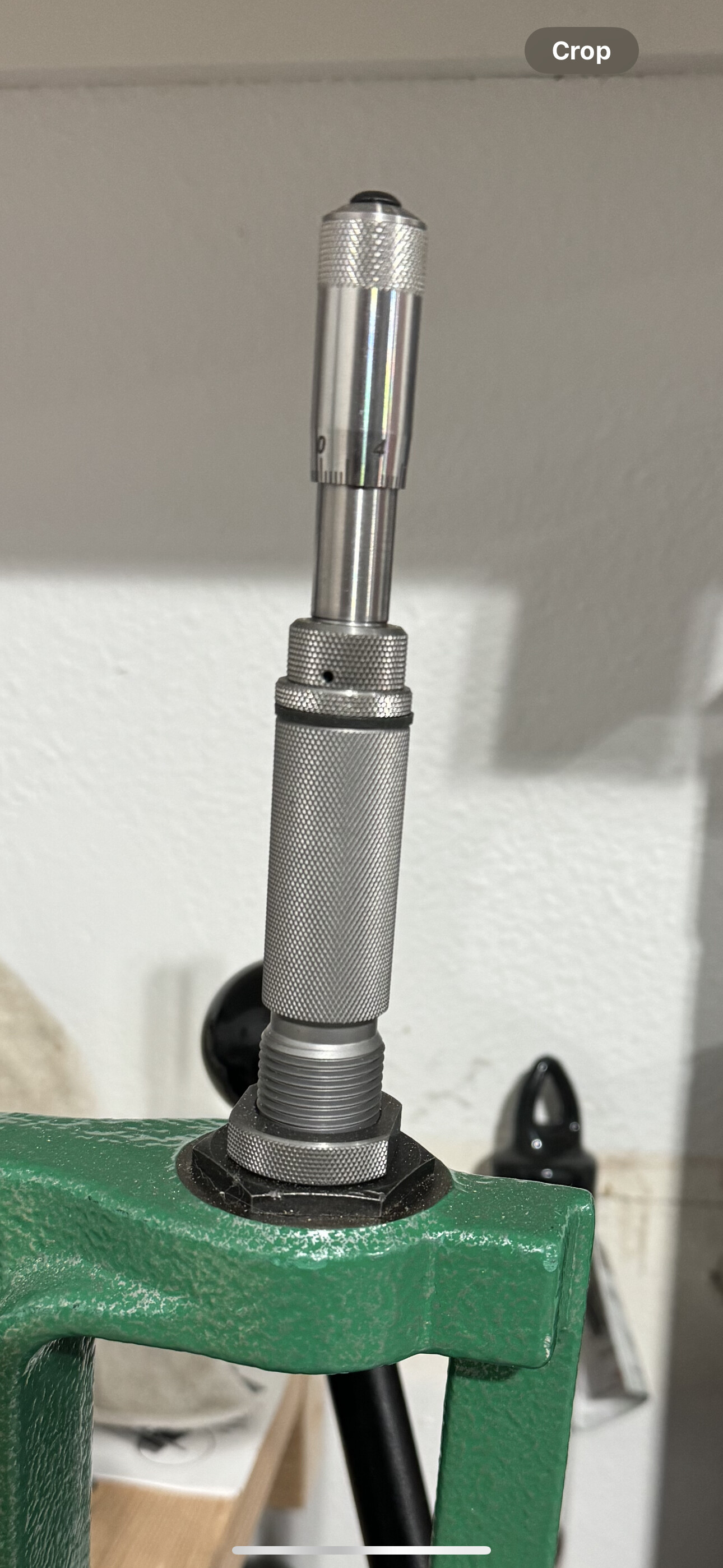
Can you screw the die further out of the collet to get more room to seat?
Nope it’s all the way out. I’m wondering if I need a different brand seating die. I’ve seated hundreds of bullets and never had this issue until tryin to seat my 7PRC Berger bullets.
It depends on which die, not what bullet. Here’s a Redding chart showing who needs short or long:
VLD Competition Seater Chart - Redding Reloading Equipment: reloading equipment for rifles, handguns, pistols, revolvers and SAECO bullet casting equipment.
Might help in your fact finding mission. The stem length may be your issue.
Good luck.
Is there a list of which bullets are considered VLD?
Thanks
Thanks John! Let me know if you guys can think of a solution outside of buying a new seating die.
Out of curiosity, have you tried seating the bullet at standard reloading manual overall length? I’ve noticed practically no benefit from adjusting seating depth for most modern cartridges and projectiles.
Yep I have. I’ll let others jump in to answer whether seating depth makes a difference. I’ve heard it’s a major factor in accuracy but I haven’t done enough research to opine.
I see no difference in seating depth at small increments. At big jumps like 30 60 and 90 thou off the lands I sometimes see big changes in accuracy depending on the bullet design.
Yeah, I think that the bullet design plays a big role. My first experience with reloading was with 7mm 08 and a TSX bullet. Seating depth changes made significant improvements although as Jim said they were pretty big changes like 0.025 increments.
On the other hand my next adventure was with an lrx and I could not make seating depth make any difference at all even with big changes. Hammer bullet says the exact same thing about their bullets. Hornady says the exact same thing about their ELD bullets.
I believe most companies have adopted something resembling the Berger hybrid design that makes seating depth largely irrelevant. I loaded to ‘book’ length for the last several load devs I’ve done and haven’t even bothered trying to mess with seating depth as it ended up being good enough as is and to try to prove any sort of improvements to accuracy by chasing seating depth would take literally hundreds of test shots downrange.
Depends. The professional, national and world champion winning benchrest shooters will say that seating depth matters. These are people that win matches by shooting repeated, over and over, 5 shot .250 group aggregates and down. Many state without hesitation that the closer you get to the lands, and even into the lands, increase precision. However, the techniques they utilize do not transfer well over to PRS or hunting easily. If you don’t understand why I would suggest you google Eric Cortinas video interviews with some of the top people in the sport. The way you load, and how much time you want to chase the perfect load, which is one you can repeat, is up to you. The previous post asking if you had just loaded to standard lengths is good advice. My starting point is always the same; shoot some factory loads to see if I can find one the weapons clearly likes better than others. Then I go about the business to create a clone handload, and I start by seating the bullet to the same depth as the factory load. The statement has been made thousands of times already, but each weapon is unique, and some will shoot loads at standard COAL extremely well (think Federal 168 Sierra .308 Win Match factory loads) and some do not. My observation is that a weapon that shoots nothing in a factory offering to a level that it is distinguishable from the rest, and all seem to shoot at the same group size or larger, means that is what the weapon is really capable of, and you may find a better handload, but the rifle is finicky. I have had some weapons that would shoot just about any weight, powder bullet combination I wanted to try, extremely well; and some that made me work to find something it would should to an acceptable standard (1.0 x 10 shots or better). Working seating depths a few thousandths at a time takes patience.
Good Luck
Great synopsis. I had to learn the hard way on an elk hunt. My hand loads with fire formed cases and were very accurate. But when I went hunting at sub 32 deg F, one got stuck and the guide said no more hand loads, factory only. I’m 4 hrs by horseback deep in the woods with 10 rounds of factory and a gun not sighted in with that load. 
I hit my bull on the 6th shot by aiming at the snow in front of him at 330 yds. Crazy!!!
I’ve followed Erik Cortina for quite a while. His info is spot on. I use 1 of his tuner brakes on my 6.5cm. It even makes match ammo shoot better when used properly…
How hard is it to tune? I have a tuner that I can use with a suppressor that has a set screw. I haven’t put the tuner on yet bc I am afraid with essentially infinite positioning of the tuner, it won’t be obvious which is the best setting and I’ll just be playing around with it ad nauseum.
I tried different settings and watched the effect on target. I shoot at a range that has e-targets which gives instant results. As far as with a suppressor I’m clueless…
I’m interested in the tuner you could use with a suppressor looks like? Was it made for your suppressor or can you add it to any suppressor?
Gonna try it this week. Will try and give an update.